
Japanese whisky grew out of the Scotch tradition and has built its own identity through the art of blending and a refined style. The Jastin Off Licence range includes Suntory's Hibiki blend and innovative bottles finished in casks made from Japanese woods, and we deliver your order across North Cyprus.
Product list
A short history of Japanese whisky
Japan's first whisky distillery was the one Shinjirō Torii founded at Yamazaki, near Kyoto. He was helped by Masataka Taketsuru, who had served an apprenticeship at distilleries in Scotland. Taketsuru later founded Nikka and in 1934 opened the Yoichi distillery in Hokkaido. The first commercial whisky from Torii's company, Shirofuda, was released in 1929. That Scottish root can still be felt in Japanese whisky's approach to malts and blends today.
What does the "Japanese whisky" label tell you?
In 2021 the Japan Spirits & Liqueurs Makers Association (JSLMA) published a labelling standard for its members. Under it, whisky labelled Japanese whisky must use malted grain and Japanese water; saccharification, fermentation and distillation must take place at a distillery in Japan. The whisky must mature in wooden casks of no more than 700 litres in Japan for at least three years and be bottled in Japan at a minimum of 40% ABV. The standard's transition period ended in 2024; it isn't binding on producers outside the association.
So not every bottle blended in Japan meets this definition. Some brands blend Japanese whiskies with whiskies from abroad and look for their own character through casks made from native Japanese woods. Knowing this distinction when you read the label helps set your expectations.
Styles on our shelves
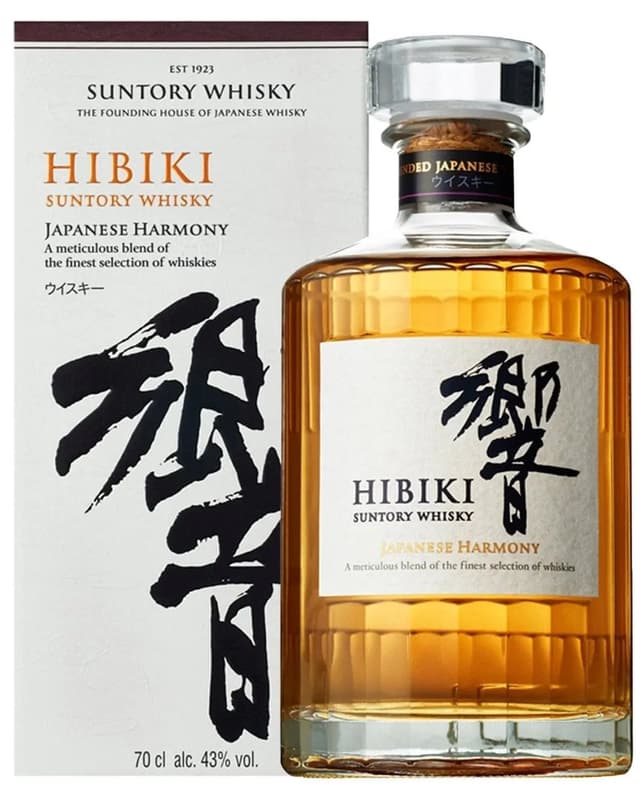
- Hibiki Japanese Harmony: Suntory's non-age-statement blended whisky, combining malt and grain whiskies from the Yamazaki, Hakushu and Chita distilleries. A good start for getting to know the Japanese approach to blending.
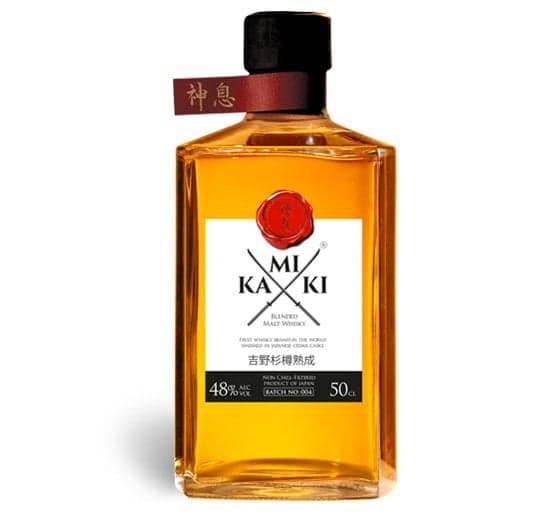
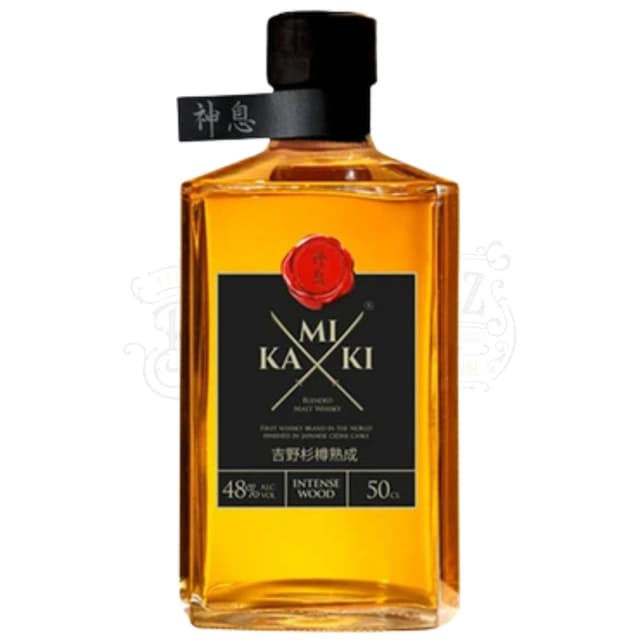
- Kamiki Original: a blend of Japanese and imported malt whiskies, finished in Japanese cedar (Yoshino sugi) casks. The cedar adds a woody, resinous layer of aroma.
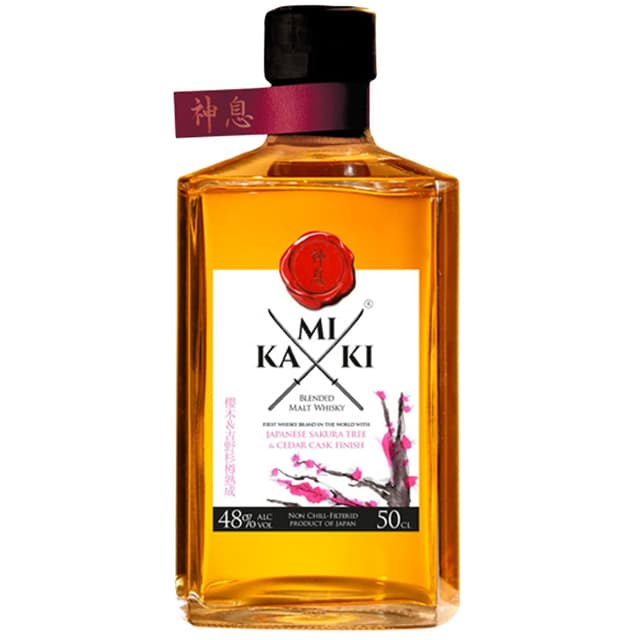
- Kamiki Sakura Wood: adds cherry wood casks to the cedar for a more floral, fruity take.
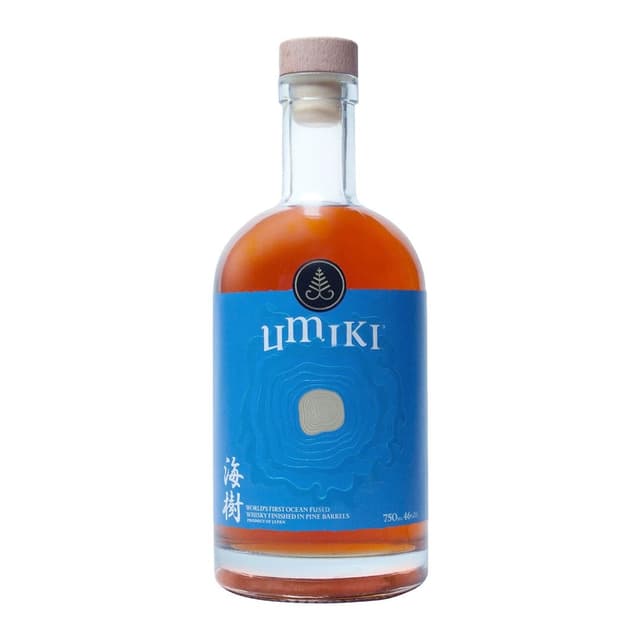
- Umiki Blended Whisky: blends Japanese malt whiskies from coastal distilleries with imported grain whiskies, finished in Japanese pine casks.
How to serve it
Japan's favourite way to drink whisky is the highball: whisky and cold soda in a tall glass full of ice, gently stirred. Mizuwari is a light serve where whisky is diluted with ice and water and drunk throughout a meal. To taste the finesse of the blends neat, use a tulip glass. Their light, balanced style suits dishes such as sushi, grilled fish and yakitori. To compare with Scotch-style malts and blends, see our single malt and blended ranges, or the main whisky page for every style. Message us on WhatsApp for a current price.
Frequently asked questions
What makes a whisky count as Japanese whisky?
Under the JSLMA's 2021 standard, it must use malted grain and Japanese water; fermentation, distillation and at least three years' maturation in wooden casks must happen in Japan, and it must be bottled in Japan at a minimum of 40% ABV. The standard applies to association members; its transition period ended in 2024.
Is Hibiki Japanese Harmony a single malt?
No, Hibiki Japanese Harmony is a blended whisky. It blends malt whiskies from Suntory's Yamazaki and Hakushu distilleries with grain whisky from the Chita distillery, and carries no age statement. Not all Japanese whisky is single malt; blending is one of the tradition's greatest strengths.
How is Japanese whisky drunk?
In Japan the most common serve is the highball: plenty of ice, whisky and cold soda in a tall glass. Mizuwari, diluted with ice and water, is also popular with food. To appreciate the finesse of a blend, tasting it neat or with a few drops of water from a tulip glass is also recommended.
Be the first to hear about offers and new arrivals — sign up to the Jastin newsletter.